Based upon multiple posts that I’ve read, it appears that the rudders can get out of alignment. How does that occur? How do you detect it and correct it?
I was thinking about installing 2 rudder position sensors, and then using CodeRed to monitor them and let me know when they’re out of alignment.
2 rudder position sensors would be fantastic for 2 independent autopilots.
The rudders can not go out of alignment, unless there is a leak in the system. It could be an external leak, or more frustrating is an internal leak. It could be a bit of fluid getting through the internal seals of the rams. Or the isolation valves. It is difficult to isolate when there is an issue.
Realignment is simple.
Center one rudder, then open it’s isolation valve.
Next center the second rudder.
Now close the isolation valve.
Job done.
Now measure the exposed ram on each side. Write this figure on the ram, so that it can be done anytime, including at sea from the measurements alone.
I had an idea to put both rudders in bypass mode, then on a calm day motor with both engines at the same rpm in a straight line. Then close the valves to lock in the rudders. This will eliminate any imperfections in the mounting of the rams.
I haven’t done it yet. Any thoughts?
Much simpler to jump in the water and align them by sight.
Most times there is a lot of turbulence directly behind the props, along with a residual twist in the water current. This could complicate the process, but hey, give it a try!
This is why it’s important to write the length of exposed ram on the ram when the rudders are perfect. Then you can check and adjust anytime. But they should not go out os sync without a reason.
At certain rpm, my rudders even develope a little bit of flutter. This can really work the system. I can only notice that in glassy conditions, but I assume it’s there in any conditions, so I don’t run the engines at that rpm in any conditions. Most aircraft and helicopters have a resonant rpm that should be avoided, so it’s nothing unusual.
My theory was internal ram leakage. Was worse after layup and the more they were used it would get better. Need to exercise the gear. I’m guessing over time they need a rebuild.
The Kynsna process for re-centring the rudders is attached. To save you opening it this is the relevant part.
CENTRING THE TWO RUDDERS
Turn the helm wheel hard to port,
Go to the bypass valve on the port side and open this valve.
Return to the helm and continue turning to port until the wheel stops turning. When it stops return to the port side bypass valve and close it.
Go to the starboard bypass valve and open it.
Return to the helm and turn the wheel to port until the wheel stops turning.
Return to the starboard bypass valve and close it.
The rudders are now equalised.
Notably, this aligns the rudders hard to port at the end of their travel on the hydraulic rams - so it is not dependent on having “centre” well marked.
Our rudders have a nice centre line marked (from new) and I have done both the process suggested by Mike above and the KYC process many times. I don’t think that aligning in the water “by eye” would really be possible.
From hard won experience… The KYC method is not possible under sail mid-ocean - you have to drop all sail and have the boat stationary. The method using the centre line can be approximated without taking all sail down to keep going without having to drop sail. Either of these methods at sea with following waves risks a wave coming up the steps and into the locker whilst it is open.
We are on our third set of hydraulic cylinder barrels - I will dig out my photos from when I rebuilt them.
We always knew ours needed recalibrated when the actual route over ground started getting several meters off the autopilot route in normal conditions. Once we recalibrated per Knysna and Ian’s instruction above our route over ground would follow the autopilot route.
We had issues with our rams as there were contaminates in the fluids that scraped grooves into the walls of the rams letting fluid pass to the other side. After Knysna replaced the rams, we have not had to recalibrate in over 6 months from Annapolis to Trinidad.
You start to feel a sluggish mid spot in the steering, then as it gets worse you can hear a roaring noise from the rear steps caused by the excess turbulence.
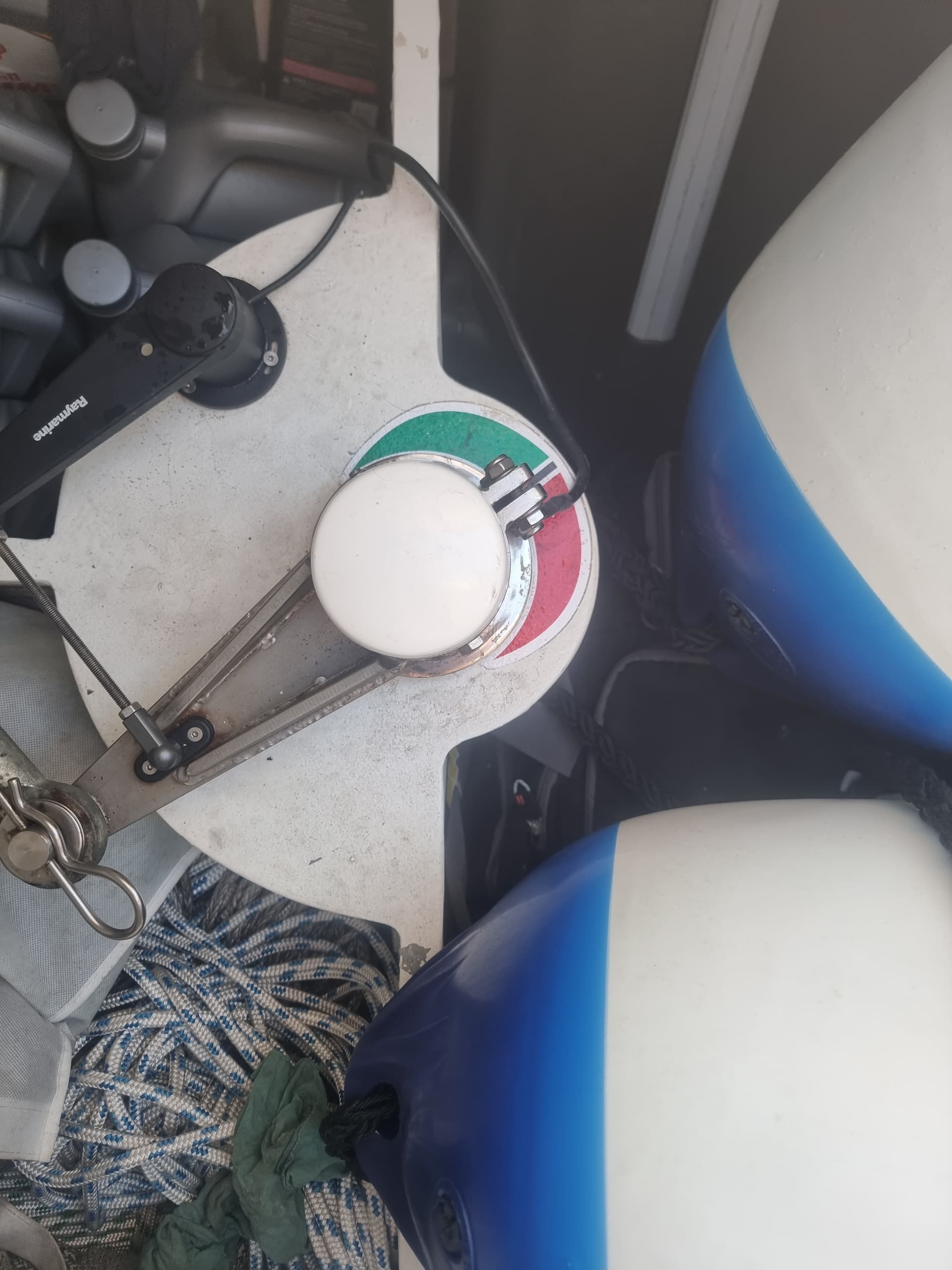
On our boat KYC fitted stickers to show rudder position. You can look at these - centre one and check that the other is also centred.
As per Don’s comment you will not be able to sail a true coarse and your performance will start to suffer and your sail plan become unbalanced … are some of the tell tales.
We had a challenging event sailing from South Africa to the Caribbean a few years ago when we had something wrap around our starboard sail drive and rudder. Just before sunset (about 4 days out from St Helena) I started both engines to make a sail change and there was an almost instant shudder from the starboard engine. I jump over the side (once stopped and tethered to the yacht!) confirmed we had lost a blade from the feathering prop! … What we also discovered later was this incident had also bent the ram on the starboard side. This resulted in us having to recalibrate our rudders on average every 4 hours … 24/7 for the next three plus weeks to Barbados !!! … Needless to say I became reasonably proficient at recalibrating rudders over this time! This was done as follows (recalibrating rudders at anchor is a breeze!) Furl the genoa … bring the yacht up into the wind (this is very interesting a big swell … with one engine!) to minimize the load on the rudders and then the person on the helm would indicate that the rudders were "centered’ I would then check the position of the rudders and work out which was was out … sometimes it was both but not often and then I would center the one rudder and immediately isolate it with the stop valve and then rush to the other rudder and get the person on the helm to move that rudder to the center position and when done have someone (or me) and fast as possible open the bypass valve on the first rudder and then we were generally good to go! .
It is critical that your rudder stocks are marked on the top showing the center position for this process.
I would also when at anchor suggest having your rudders adjusted to being slightly toed in by about 5 degrees.
It it what i have done with sailing my Hobie Cats and listening to some of my mutlihull mates who have forgotten more about sailing multihulls than I know!
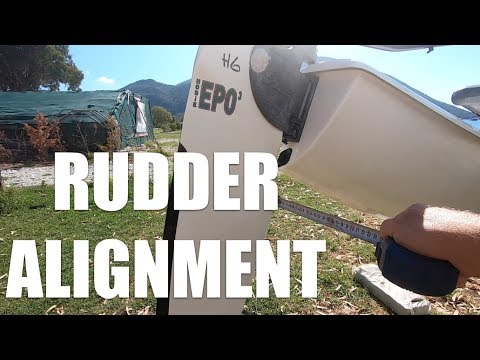
Check the first couple of minutes of this to get the idea.